Web Design for Small Business in South Africa: What to Put in the Brief
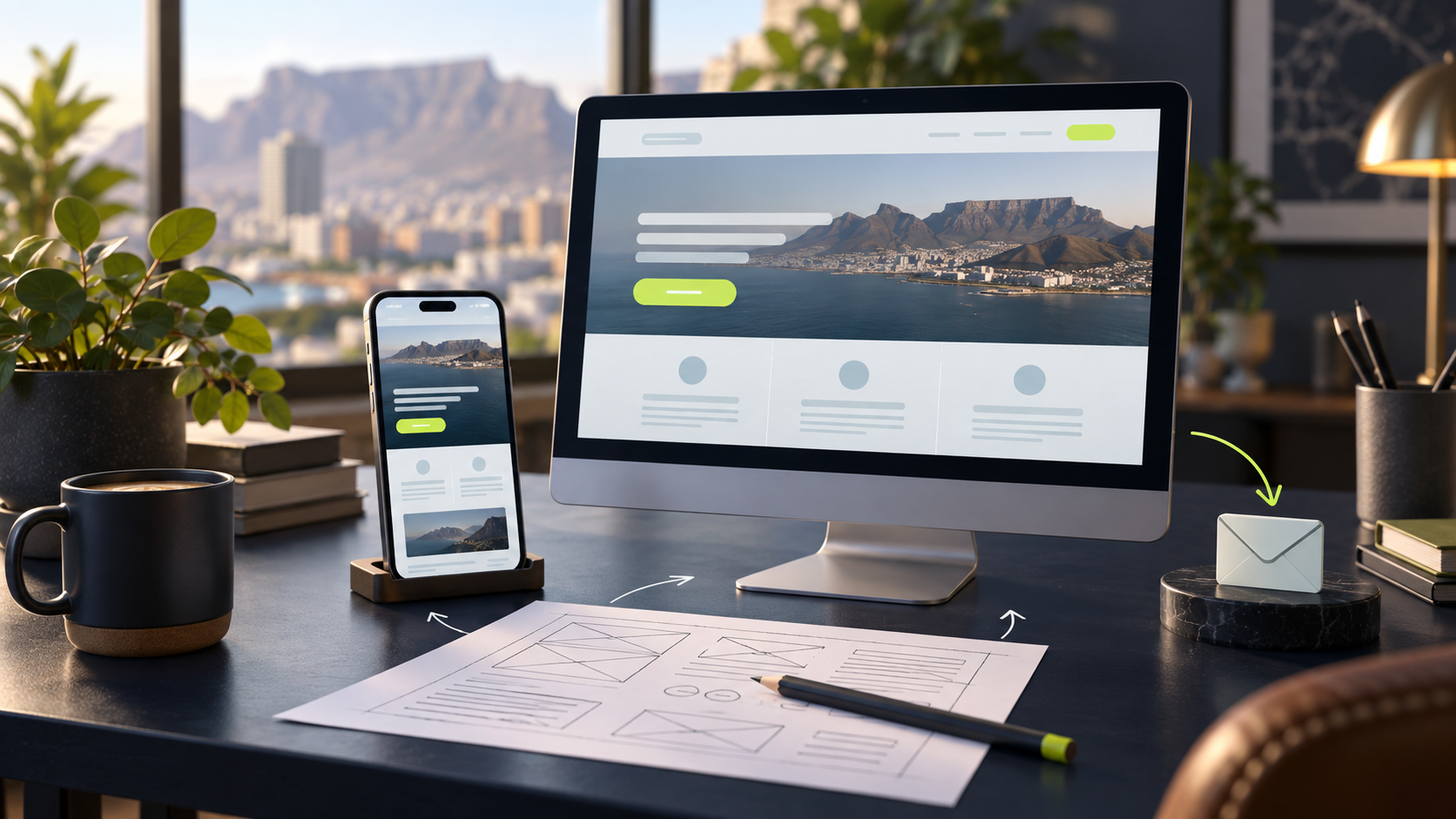
Web Design for Small Business in South Africa: What to Put in the Brief
Define the customer and the first useful action
Decide which pages the business genuinely needs
Supply proof and useful source material
Specify the mobile journey before approving the design
Describe the enquiry handover explicitly
Include search and measurement in the delivery scope
Compare proposals using total responsibility
A small-business website brief should explain what a visitor needs to understand, what action they should take, and what must happen after that action. Page count, colours, and photographs come after those decisions.
For a South African service business, the website may need to support quote requests, phone calls, appointment bookings, or enquiries through a preferred messaging channel. Each route needs an owner and a working handover. A polished page is valuable only when the complete customer journey is clear.
Here is a practical brief you can use before requesting a design proposal.
Define the customer and the first useful action
Describe the person who should use the website and the problem that brings them there. “Everyone who needs our service” gives a designer little direction. A more useful description might be “owners of small professional firms in Gauteng who need a better way to manage new enquiries.”
Then choose a primary action. Is the visitor ready to book, or do they need to request information first? An immediate booking can work for a clearly defined consultation. A complex installation may need a short enquiry before anyone can offer a meaningful appointment.
Write down what the visitor will receive after submitting. This becomes the foundation of the call to action and the confirmation message.
Decide which pages the business genuinely needs
A service website commonly needs a clear introduction, separate pages for materially different services, credible information about the business, relevant evidence, and a contact or booking journey. Useful resources can support questions that arise before a buyer is ready to speak.
Separate pages should have separate purposes. A long list of near-identical service and location pages increases maintenance without necessarily helping customers.
For each proposed page, identify its audience, main question, evidence, and next action. This makes it easier to compare design proposals and prevents page count from becoming the main measure of value.
Watch Out
A good-looking form can still lose enquiries after submission. The brief should name the destination, required fields, notification recipient and success message, and require an end-to-end check before launch.
Supply proof and useful source material
Give the designer accurate service details, original photographs where available, brand assets, and approved testimonials or case studies. Identify who can verify technical claims and answer questions during the project.
Distinguish supplied material from material that the provider must create. Copywriting, photography, illustration, editing, and content entry can represent significant work. The quotation should show what is included.
Avoid adding badges, credentials, results, or client logos that the business cannot substantiate or is not entitled to use. Specific, accurate evidence is more useful than generic declarations of being the best.

Specify the mobile journey before approving the design
Ask for the actual service and enquiry pages to be demonstrated at phone, tablet, and desktop sizes. Check the task, not only the appearance.
Can a visitor understand the service without excessive scrolling? Can they tap the intended action easily? Do menus close properly? Are labels visible while completing the form? Does an error explain what needs correcting?
Test on an ordinary mobile connection as well as office Wi-Fi. Large images, video, chat tools, and tracking scripts all need to be considered within the complete page experience. Performance should be measured on the delivered website rather than inferred from the design mock-up.
Pro Tip
Ask a colleague unfamiliar with the draft site to complete one task on their phone: identify the service, understand the evidence and make an enquiry. Note every point where they hesitate or need an explanation.
Describe the enquiry handover explicitly
Your brief should name the required fields, destination, responsible team member, and confirmation behaviour. If the website connects to a CRM, specify which information must arrive and how duplicates should be handled.
If a WhatsApp link is included, confirm the number, who monitors it, and the response expectation. A link that opens a conversation is different from a complete CRM integration. Ask the provider to demonstrate the behaviour you are buying.
Collect only what the initial interaction needs. Explain the purpose and handling of the information, and have the relevant privacy arrangements reviewed for your business. Adding a policy link does not, by itself, validate the underlying process.
Include search and measurement in the delivery scope
Ask who sets page titles, descriptions, canonical URLs, redirects, and the sitemap. If you already have a website, preserve valuable URLs where appropriate and plan redirects for changed pages before launch.
Define what counts as an enquiry. Google’s guide to measuring a key event shows how meaningful actions can be reported in Analytics. In your project, the implementation should distinguish a successful submission from a click or a failed attempt.
Request a controlled test that follows the submission through the website, confirmation, CRM record, notification, and measurement. Record what was verified and any limitations.
Compare proposals using total responsibility
Confirm the design and development fee, ongoing hosting, licences, maintenance, content changes, and support. Check the currency and VAT treatment. Ask who owns the domain, website, accounts, content, and analytics access.
Also agree what happens when something breaks. A maintenance plan should describe its responsibilities and exclusions rather than simply promise “support.”
Key Takeaway
A useful website brief defines the customer decision and the handover that follows it. Design, content, mobile usability, tracking and ownership should all support that journey.
Frequently asked questions
Is a one-page website enough?
It can be enough for a focused offer with a straightforward journey. Several distinct services or search intents often need more room. Choose the structure around customer questions and future maintenance.
Should I redesign before investing in marketing?
First check the existing journey. Sometimes focused repairs are sufficient. A broader redesign is justified when the structure, content, or technology prevents the website from doing its job.
What should I bring to a first consultation?
Your website address, priority services, target customers, current enquiry process, available brand material, and the problems you want to solve. Book a strategy call with Blink Digital Consulting to connect the website brief to your lead-generation system.
Blink Digital Consulting
Blink Digital Consulting helps businesses generate qualified leads, improve online visibility, automate follow-up, and build digital marketing systems that work around the clock.