Small Business SEO Services in Canada: What Should Be Included?

Small Business SEO Services in Canada: What Should Be Included?
Start with the enquiries you want
Expect a baseline and an ordered repair plan
Separate service-page work from article production
Include local visibility where it fits the business
Ask how AI visibility is measured
Require reporting that follows the enquiry
Questions to ask before accepting a proposal
How quickly should SEO produce leads?
Should a small business pay for SEO and advertising together?
A useful small-business SEO service should make your business easier to find, help the right visitor understand your offer, and show whether search is producing enquiries. A monthly report full of keyword movements is only one part of that job.
For a Canadian service business, the first question is scope. Are you trying to win local customers in Calgary, serve clients across Alberta, or attract a national audience? Those are different assignments. A proposal should explain which one it is designed to support.
Here is a practical way to compare services before committing a budget.
Start with the enquiries you want
Write down three services you want to sell more often. Beside each, record the customer, the area you genuinely serve, and the next step a prospect should take. For example: a Calgary contractor might prioritise furnace installation enquiries from homeowners within its operating area, with a request for an assessment as the next step.
This brief gives keyword research a commercial purpose. “More traffic” is too broad to guide the work. A page attracting job seekers or students can increase visits without bringing your business closer to its sales goals.
Ask the provider to distinguish searches for hiring a supplier from searches for learning how to do the job. Both can be useful, but they need different pages and expectations.
Expect a baseline and an ordered repair plan
Before new articles are commissioned, the provider should establish which important pages search engines can access and which pages already attract relevant searches. The initial review should cover indexing, redirects, duplicate URLs, mobile usability, broken links, and the path from an enquiry form to your team.
Ask for a short list of problems ranked by impact, with a named owner for each fix. “Technical SEO included” is less useful than “we will repair these five pages, validate the result, and record the change.”
You can use Blink’s SEO Quality Assurance Standard as a starting point for discussing the checks a project requires. The final scope should reflect your website’s actual condition.
Watch Out
A promise to publish a fixed number of articles does not tell you whether technical fixes, expert review, publishing or enquiry tracking are included. Ask who will complete each part and what evidence will show it is finished.
Separate service-page work from article production
A service page answers whether your business is a suitable provider. An article helps a visitor make a specific decision or solve a problem. A sound proposal explains how the two work together.
For example, an accounting firm could have a bookkeeping service page supported by a guide to preparing for a bookkeeping handover. The guide should link naturally to the service, while the service page can point to the guide when it helps a prospect understand the process.
Ask who supplies subject expertise, who checks claims, and who approves the finished copy. Article count alone is a weak measure of value. Google’s people-first content guidance emphasises usefulness and reliability. Apply that principle by requiring every proposed article to answer a recognisable customer question.

Include local visibility where it fits the business
If customers visit you or you travel to them, discuss your Google Business Profile alongside the website. The work may include accurate business information, appropriate categories, review processes, and useful local service content.
Location pages should reflect real operations. A company serving Calgary does not need dozens of pages with the same copy and a different neighbourhood name. Useful local pages explain the service, its availability, and relevant evidence that helps a customer choose.
National businesses may need a different emphasis. The proposal should explain why a local, provincial, or national approach fits the way customers actually buy.
Pro Tip
Bring one real customer enquiry to the proposal discussion. Ask the provider to trace the search, landing page, call to action and follow-up that should produce more enquiries like it. Use the same example when comparing suppliers.
Ask how AI visibility is measured
AI search visibility can be assessed through a defined set of customer questions, recorded answers, and citation checks. It should be reported separately from ordinary search rankings and website traffic.
Ask which questions will be tested, which markets and platforms are included, and how often the checks will be repeated. A mention in one answer is useful evidence, but it does not prove that every potential customer will receive the same answer.
Google says its existing SEO practices also apply to its AI search features. A proposal should therefore explain the underlying content and website work, as well as the monitoring.
Require reporting that follows the enquiry
A useful monthly review answers four questions:
Which priority pages gained or lost relevant search visibility?
What work was completed, and what changed on the website?
How many genuine enquiries came through those journeys?
What will be improved next, and why?
Keep form submissions, qualified enquiries, and customers separate. If five forms arrive but only two fit your service, that is different from five qualified opportunities. Agree who records these outcomes so the report remains useful after the initial website visit.
Questions to ask before accepting a proposal
Which services, locations, and customer questions will this scope prioritise?
Does the fee include implementation, content review, and reporting, or only recommendations?
Who owns the website, content, accounts, and data?
How will progress be judged if rankings improve but enquiries do not?
What is excluded, and what would trigger additional fees?
Key Takeaway
A useful SEO scope connects a defined market to useful pages, a working enquiry journey and evidence of progress. Compare those responsibilities before comparing article counts or ranking reports.
Frequently asked questions
How quickly should SEO produce leads?
There is no dependable universal deadline. Starting visibility, competition, website condition, demand, and the sales process all matter. Ask for a staged work plan and review dates rather than a guaranteed ranking date.
Should a small business pay for SEO and advertising together?
Sometimes. Advertising can test demand while SEO work develops, but only if the business can support both properly. A working landing page, enquiry tracking, and follow-up process should come before spreading a limited budget across several channels.
What should I do first?
Define the enquiries you want, then check whether the website can attract and handle them. Book a strategy call with Blink Digital Consulting to review the gaps and discuss an appropriate SEO and AI visibility scope.
Blink Digital Consulting
Blink Digital Consulting helps businesses generate qualified leads, improve online visibility, automate follow-up, and build digital marketing systems that work around the clock.
Related Posts
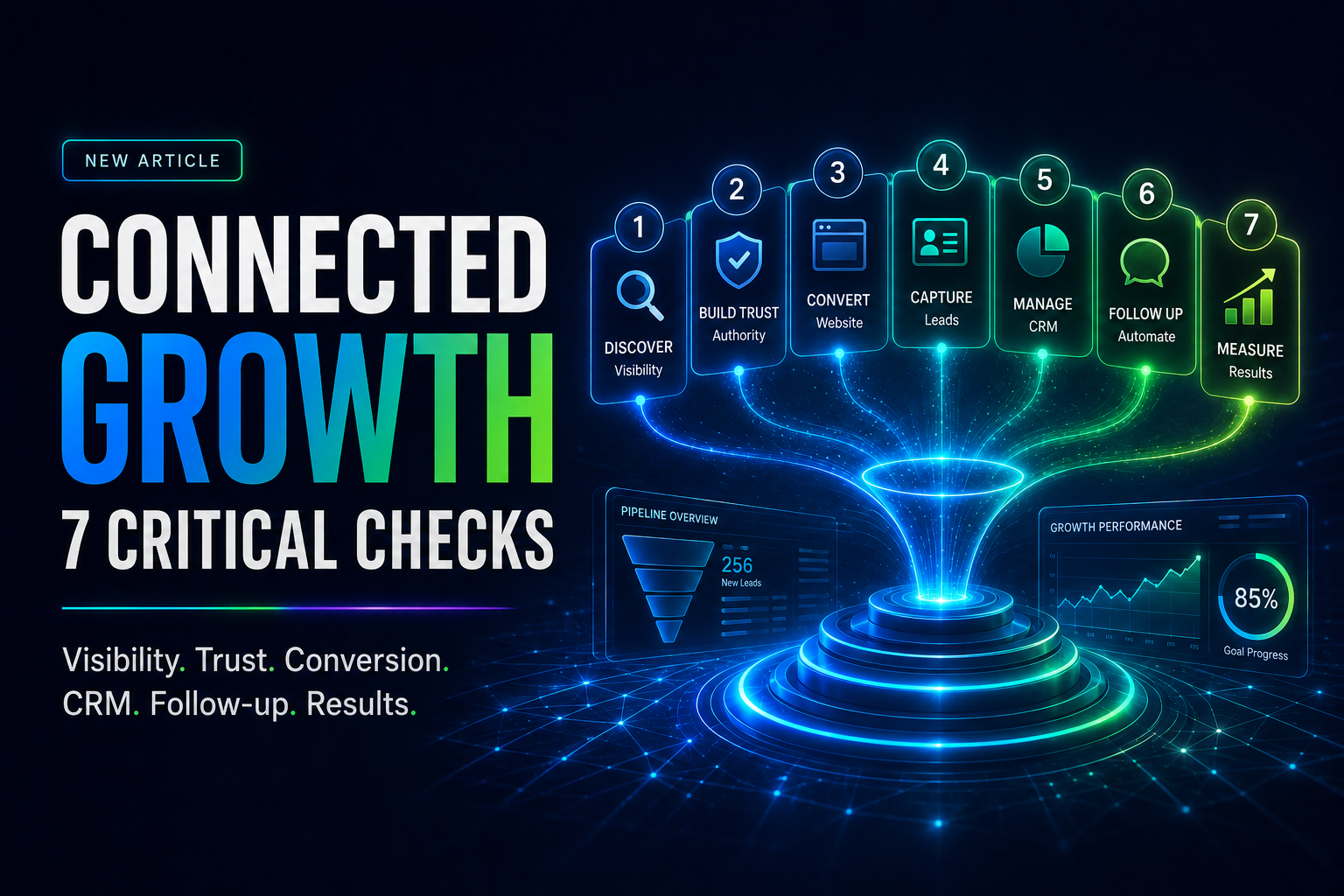
The 7 Critical Checks Behind a Connected Growth System
Use seven practical checks to connect SEO, AI visibility, conversion, lead capture, CRM, follow up, and measurement into one growth system.

What Are Your Ads Really Telling You?
Learn how to read the signals in your advertising data, identify what limits performance and turn campaign insight into smarter growth decisions.

The Evidence Based SEO Tier List for 2026
Discover which SEO strategies matter most in 2026, from technical foundations and expert content to backlinks, AI, schema, local SEO and video.